

Endless Wave Morocco · Market Guide
Souk El Had
& the Local
Markets
Africa's largest urban market. A fortress of 6,000 stalls. The beating commercial heart of Agadir — and the surrounding weekly souks the tourists never find.
"From a distance it resembles a fortress — 6-metre walls, 15 towering gates. Inside: the whole of Morocco in one market."
The Main Event
Africa's largest
walled market
Closed Mondays
Sun = 30,000 visitors
then petit taxi
The name says it all. Souk El Had means "Sunday Market" in Arabic — named after the day it was traditionally held, deep in the old Talboujt neighbourhood before the catastrophic 1960 earthquake levelled Agadir and claimed over 10,000 lives. The city was rebuilt from scratch. So was the souk.
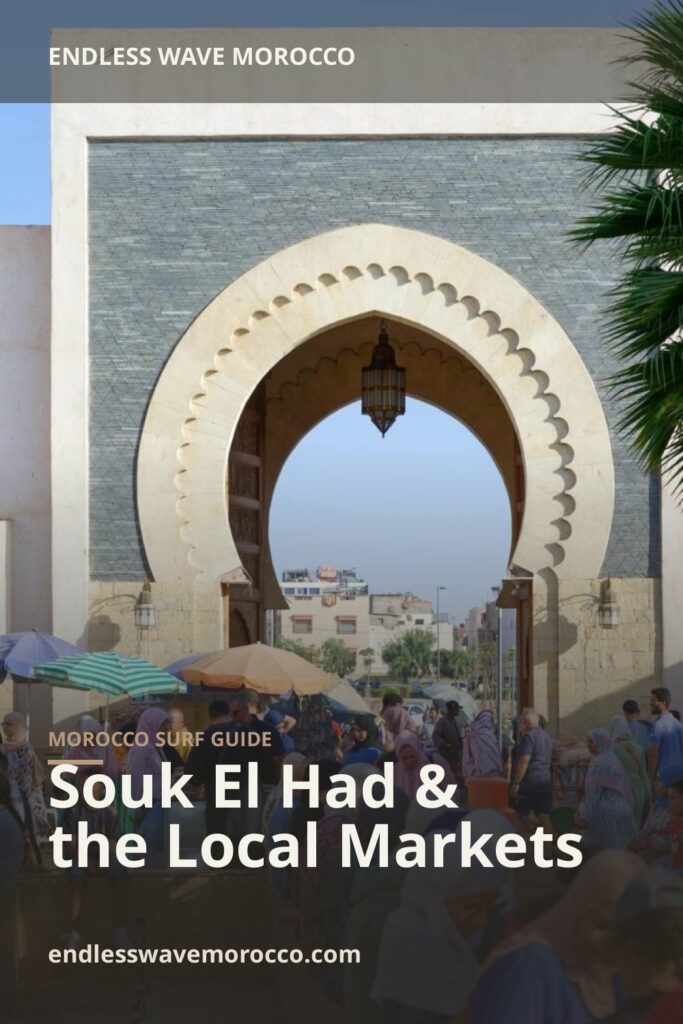
In the new Amsernat district, what started as a cluster of tents became a permanent structure, then a renovated compound, then a renovated compound again in 2021 — and what stands today is something unique on the continent. A fortified commercial city, its concrete-and-clay walls rising 8 metres, pierced by 15 gates, enclosing 13 hectares of organized, chaotic, intoxicating Moroccan market life.
On a Sunday — the name day — the population swells to 30,000 people. Farmers from the Souss valley bring their produce. Artisans from the Atlas foothills bring their craft. Women in traditional Amazigh dress extract argan oil at the entrance. The smell of roasted almonds, saffron, and cumin hangs in every alley. A man sells live chickens three stalls from a boy selling smartphones. This is the real Agadir — not the seafront hotels, not the beach bars. This.
And the best part? Almost nobody who comes for the surf ever finds it.
Navigate the Fortress
Which gate
do you enter?
Each of the 15 gates leads to a different zone. Here are the most useful four to know before you walk in.
The first thing you smell is roasted almonds and argan. A long row of shops press amlou on site — almonds, honey, argan oil — and women in Amazigh dress extract oil by hand. The spice stalls follow: mountains of saffron, cumin, ras el hanout, dried rose petals. Agadir's most famous argan cooperatives had their start here.
Argan · Spices · AmlouStart here to go against the tourist flow. Vibrant displays of fruit and vegetables — prickly pears, blood oranges, dates, fresh herbs — set up by farmers who came in from the Souss valley before sunrise. This is where locals do their daily grocery run. Prices here are the most fixed in the market; no haggling expected on food.
Fruit · Vegetables · HerbsHand-woven carpets and Berber rugs in every colour, leather babouche slippers, copper lanterns, ceramic tagines, silver Amazigh jewellery, carved wooden boxes, basketwork. This is the zone most tourists gravitate toward — which means it's busiest, but also has the most variety. Haggling here is expected and enjoyable.
Crafts · Carpets · JewelleryThe gate where unofficial guides cluster — you don't need one, but if you want one, negotiate upfront and pay at the end (50–100 MAD for two hours is fair). Beyond the gate: clothing, electronics, household goods, tools, bric-a-brac, second-hand books. This is where Agadir residents come to buy their everyday needs, not souvenirs.
Clothing · Electronics · Local goodsWhat to buy,
what to skip.
Six things worth hunting down inside Souk El Had — and the honest word on each one, from people who've done the walk many times.
Agadir sits at the heart of Morocco's argan region. Gate 4 has cooperatives selling cold-pressed culinary and cosmetic argan oil, plus amlou — the extraordinary paste of ground almonds, argan oil, and raw honey. It's essentially Morocco's answer to peanut butter, and it's extraordinary. This is the first market in Morocco to become famous for argan products.
Tip: Watch it being made in front of you. If no one is pressing — it's not fresh. Buy from the women's cooperatives for the most authentic product.
The Souss-Massa region produces some of Morocco's finest saffron, and the souk spice stalls are the best place to buy it outside a specialist shop. Ras el hanout blends vary by seller — each family has a different mix. Dried rose petals, orange blossom water, cumin, coriander seed, and harissa paste are all worth packing into your bag.
Tip: Saffron should smell intensely floral and taste slightly bitter. If it's cheap with no smell, it's dyed corn silk. Pay a little more for the real thing.
Amazigh (Berber) silver work is one of the great traditions of the Souss region. Look for the hand of Fatima (Khamsa), geometric pendants, fibula brooches traditionally worn to fasten cloaks, and necklaces set with coral, amber, and blue glass beads. The souk has good variety, but for the finest pieces, a trip to Tiznit or Inezgane market is worth it.
Tip: Real silver will hallmark 925. If it's unmarked and very light, it's likely nickel alloy. Lovely but different — and price accordingly.
Handwoven palm-leaf baskets and bags in every size — market bags, fruit bowls, bread baskets. Also look for sabra (cactus silk) scarves and throws — a Moroccan textile made from the agave cactus, with a distinct soft sheen and natural earthy tones. Extremely underrated compared to more touristy items. Very packable too.
Tip: Sabra is slightly rougher than silk but softens beautifully over time. It should feel cool to the touch and have a subtle shine — not glossy plastic-looking.
The Souss plain is one of Morocco's most fertile agricultural zones. The blood oranges, clementines, and pomelos sold at the produce gate are often picked the previous day. Date varieties from the pre-Saharan palmeraies south of Agadir are sold by type — medjool, boufegous, bouskri — each with a different texture and sweetness. The freshly squeezed juice stands inside the souk are the best 10 dirhams you'll spend.
Tip: Prices on fresh produce are generally fixed or near-fixed. Don't try to hard-bargain a farmer who got up at 4am — it's not appropriate here.
The hand-punched copper and brass lanterns that cast starlight patterns across a room. Ceramic tagine pots hand-painted in the Souss style. Carved cedar wood boxes inlaid with camel bone. These are the items that require a bit more baggage planning — but the souk prices are a fraction of what you'd pay in Marrakech's tourist medina. Worth the logistics.
Tip: Copper lanterns from the souk are unfinished inside. Buy a small LED puck light at the electronics section on the same visit — instant beautiful lamp, no wiring needed.
The Art of the Deal
How to haggle
in a Moroccan souk
Bargaining is not confrontation — it's conversation. Merchants expect it, enjoy it, and genuinely respect a visitor who engages properly. The worst thing you can do is either overpay without trying, or be rude and aggressive about it.
The golden rule at Souk El Had: start at 40–50% of the first price offered, and expect to settle somewhere around 60–70%. For food and basics, prices are usually fixed and haggling is inappropriate.
Pick up the item. Inspect it slowly. Ask what it's made of. Never say "I love this" before hearing the price. A calm, curious demeanour gets better deals than obvious excitement. You can always walk away — and often should.
Even a simple "Bchhal?" (How much?) or "C'est combien?" signals respect and often gets a better opening price than speaking English. Sellers appreciate the effort even if your Darija ends there. Smile. This matters a lot.
If the price is 200 MAD, offer 80–100 MAD. Don't apologise for it — just state it. The seller will counter. You counter again. This is normal and expected. Neither of you is offended. You're dancing, not fighting.
Start walking toward the exit of the stall. Genuinely. If the seller calls you back with a new price, you've found the real floor. If they don't, you were at the floor already — or they genuinely can't go lower. Either way, no hard feelings.
Fixed-price items are fixed. If you shake hands on a price, you buy — walking away after agreeing is bad form and genuinely disrespectful. And a merchant who is kind and honest deserves that in return. The best deals come from mutual respect, not aggression.
Beyond the Big One
The local markets
the tourists never reach
8 km north of Agadir · 11 min drive
Anza Souk
The weekly market closest to Taghazout surfers and the most underrated market on the coast. Farmers and vendors come in from Tamraght, Aourir, Taghazout, and the surrounding valleys to set up on Sunday morning. It sprawls up a hillside with views down to the Atlantic — one of the only markets where you can see the ocean while shopping. Don't miss the sugarcane juice stand at the entrance. Cash only, no ATMs nearby so bring dirhams.
12 km south of Agadir · 15 min drive
Inezgane Market
The urban legend says all markets in Morocco are in the middle of cities, except Inezgane — which is in the middle of markets. The whole town becomes a market on Tuesdays, with a wholesale food hub running daily alongside a cattle and grain souk. Famous for its Berber silver jewellery, colourful textiles, and a wholesale market that's a hub for fruit and vegetable trade across the Kingdom. Far less touristy than Souk El Had — this is where Moroccan traders come to trade.
15 km north of Agadir · Banana Village
Aourir Wednesday Market
Known as Banana Village for the small, intensely sweet Souss bananas grown nearby, Aourir hosts a weekly Wednesday market that's a favourite among surfers staying at Taghazout. Easy to reach by shared taxi from the coast road. The market is famous for local bananas, spices, and the freshest fruit in the region. A far more relaxed and intimate experience than Souk El Had — perfect for an early Wednesday morning before the wind picks up for an afternoon session.
15 km south of Agadir · Souss Valley
Aït Melloul Market
One of the largest markets in the broader Souss region, blending rural produce from the surrounding valley with modern commerce from the growing town. Saturday is peak day — the market surges with farming families from the interior arriving with livestock, seasonal produce, and handmade goods. Clothes, fresh fruit, handicrafts, and an authentic atmosphere that most visitors never encounter. Feels more like rural Morocco than coastal Morocco.
Central Agadir · Rebuilt 2000s
Agadir Medina Polizzi
The original Agadir medina was destroyed in the 1960 earthquake. Italian architect Coco Polizzi designed this reconstruction — a traditional village layout with workshops open to the street so you can watch artisans making the things they sell. Leather workers, jewellers, weavers, carpenters, potters. Not a bazaar — a working artisan quarter where you buy direct from the maker. Quieter, more curated, and ideal for high-quality souvenirs with a story behind them. Streets perfumed with eucalyptus.
The Perfect Morning
A market
morning route
One morning, two markets, a freshly pressed juice, and more to carry home than you planned. This is how we do it from Taghazout.
Catch a shared grand taxi on the coast road to Agadir's Batoire taxi station. Then a red petit taxi straight to Souk El Had. 40–50 MAD total. Arrive before 9am.
The argan and spice section before the crowds arrive. Watch the amlou being pressed. Buy your argan oil and spices here, where the cooperatives are. Prices are best early.
Work your way through the produce section (Gate 5) and toward the craft zone. Haggle without rush. The market is filling up but not yet overwhelming.
Find the juice stalls inside the market (pomegranate or blood orange if in season). Several small restaurants near the centre serve fish tagine for 30–50 MAD. Eat where locals are eating.
Market Calendar — Souss Coast
Before You Go
Six things we wish
someone had told us
The souk is named after Sunday, and Sunday brings 30,000 people. If you want space to think, better prices, and friendlier sellers, come Tuesday, Wednesday, or Thursday. The market is equally stocked but a fraction of the chaos. Sunday is an experience — but not for shopping.
9am entry means the best produce, the quietest alleys, and sellers who haven't heard forty price negotiations yet. By 2pm in summer the heat inside the walled compound is intense. The spice and argan cooperatives at Gate 4 are at their most atmospheric before 11am.
The market is enormous and easy to get turned around in. Write down or photograph your gate number when you enter. Walking clockwise from any gate will eventually bring you back to the exit. If you get truly lost, any stall holder will point you toward the right gate — just ask.
The souk is safe, but it is densely crowded. Pocket your phone and keep cash in a front pocket or small bag worn across your body. Don't carry your passport. Bring 200–400 MAD for a typical morning of light shopping — much more if you're eyeing rugs or big craft items.
This is not a tourist attraction — it's where Agadir's families do their weekly shopping. Covered shoulders and knees (for women especially) show respect and, honestly, result in better treatment from sellers. Walk slowly. Stop. Look. Smell. The souk rewards patience more than urgency.
If Sunday is your only option, start at Anza Souk north of Agadir (smaller, calmer, incredible views) in the early morning, then arrive at Souk El Had around 11am once you've warmed up your haggling. Two completely different experiences in one day — and the contrast is half the fun.